
As an executive coach or leader, your effectiveness depends on your capacity for presence, judgement, and ethical discernment when there is often no clear path forward.
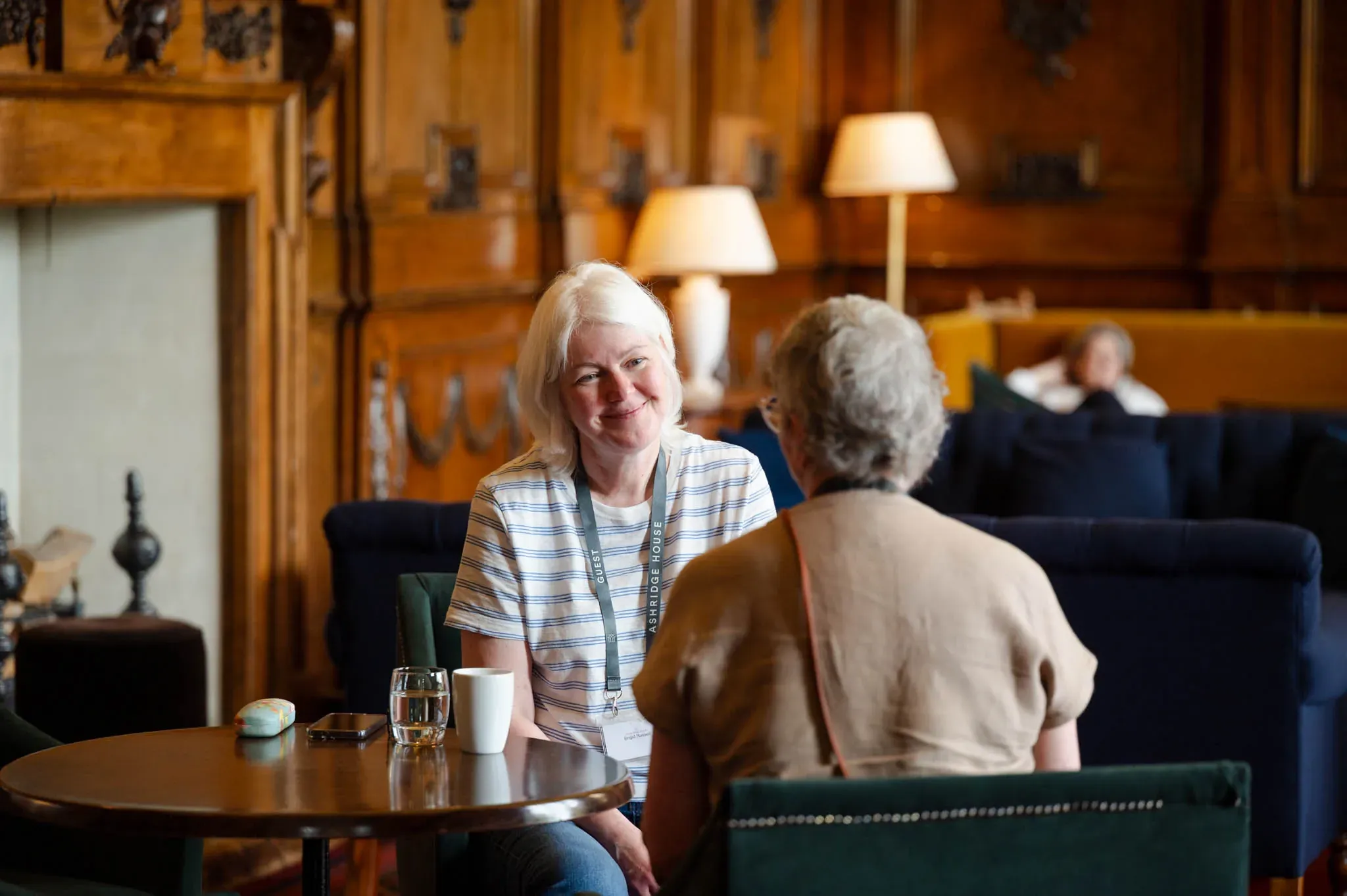
In a world being reshaped by AI, coaching remains irreplaceably human.

Hult Ashridge: The home of relational coaching
Hult is globally recognised as a triple-accredited business school offering transformational degree programmes through a highly practical approach to education.
Unlike many institutions, our coaching programmes are Higher Education qualifications, carrying the quality assurance of the QAA.
Through our close connection with our sister organisation, Hult Ashridge Executive Education, we remain closely attuned to the evolving needs of organisations.

Accredited by the European Mentoring and Coaching Council
The European Mentoring and Coaching Council (EMCC) sets globally recognised standards for coaching, mentoring, and supervision, with a strong emphasis on reflective practice and ongoing development.
Hult is one of a few providers whose close connection to the EMCC means that all coaches and supervisors who successfully achieve Ashridge Accreditation automatically gain fast-tracked recognition by the EMCC at Senior Practitioner level.

A step change in how you practice
Graduating from Hult will mark a step change in how you practice.
You will leave with the confidence to work relationally within complex systems, supported by credentials that reflect deep professional integrity.
Graduates are also eligible for one-year membership of the Association for Coaching, giving you access to a wide range of events and the option of listing your services in their member directory.

Ashridge Accredited status
We're proud to hold our own independently recognised accreditation, with an established set of ethical standards.
Gaining Ashridge Accredited Coach or Supervisor status is a signal of professional depth, opening the door to a breadth of new opportunities—including eligibilty to work for our sister organisation, Hult Ashridge Executive Education.
The home of relational coaching
Coaching does not happen to people, nor even with them, but between them.
)
How is relational coaching different?
Research consistently shows that the quality of the coaching relationship is one of the greatest predictors of outcome.
Relational coaching pays close attention to the emotional tone, spoken and unspoken in the relationship—patterns of connection and disconnection, dynamics of power, transference, and what's not being said. Workplace tensions and life stories are often replayed in the coaching room. Skillful relational coaching brings these dynamics to the surface through the coaching relationship itself—offering insight into the patterns that shape the coachee's wider experience.
Erik de Haan, PhD
Director Hult Ashridge Center for Coaching
Hult International Business School
)
Why relational coaching matters more than ever
Coaches and leaders are increasingly required to work amid heightened complexity and emotional demand. Adaptability and professional judgement are paramount—the capacity to stay present, navigate the unfolding dynamic, and choose how to intervene.
As AI makes coaching knowledge and models more accessible, the ability to work relationally with complexity, ambiguity and human dynamics becomes an even more valuable capability.
Faculty expertise
Our faculty are experienced practitioners who bring a depth of expertise across organisation development, psychology, and psychotherapy into the room.
We've spent decades refining frameworks that support relational practice. At Hult, you will use these as guides for sense-making, relying on your empathy and intuition to build transformational coaching relationships.
Coaching mastery beyond models
Hone the ethical judgement, adaptability, and psychological maturity to respond in the moment to ever-changing, complex human dynamics.
The art of knowing what matters in the moment
No formula can fully prepare you for the rich and often messy dynamics that unfold between people.
Navigating hidden currents requires the capacity to stay present under pressure and the insight to know how and when to intervene.
The Ashridge Philosophy: Coaching as a relational practice
We believe the connection between coach and client is at the heart of effective coaching and the primary vehicle for learning and change. Every session is a unique, co-created moment of discovery, rather than a remedial contract to solve a problem.
Relational coaching pays particular attention to:
The dynamics of the relationship between coach and client
The client's relationship with—and assumptions about—their organization
The client's relationships with their work, with themselves, and what they aspire to
The coach's own history and how that is informing the coaching dynamic

A snapshot of publications by our faculty
Pioneers of the profession
For more than 25 years, our faculty have developed and refined frameworks that are now widely taught, adopted, and referenced across the global coaching profession. Rather than academic abstractions, these are living frameworks that have emerged through thousands of hours of real-world coaching and organisational consulting.
These are just a few models that act as guides, rather than scripts to follow—offering a map to help navigate complexity.
Our Living Frameworks
The Relational Compass
Orienting the coach to self, other, and system in the moment. A framework used across our executive coaching and supervision programmes, helping you orient the relationship between coach and client.
Awareness of Self
Developing the coach's presence, emotional awareness, and ethical judgement. Core to all Ashridge coaching programmes, this approach teaches you to use your own experience, emotions, and presence to respond authentically in the moment.
Patterns of Repetition & Change
Working with recurring dynamics in individuals, teams, and organisations. This framing helps us acknowledge that people get stuck through patterns and how coaching can help to 'unstick' them and achieve change.
Frequently Asked Questions
Have a question that isn't answered here? A member of the team will be happy to help. Email us at admissions@ashridge.hult.edu.