Localizing Sustainability in the Classroom: The Case for Dubai
 Hult International Business School,
4 months ago
9 min read
Hult International Business School,
4 months ago
9 min read
Temperatures across the Middle East and North Africa are rising at roughly twice the global average, making the region one of the fastest-warming in the world, according to the World Meteorological Organization. There’s no question that teaching sustainability at Hult Dubai is imperative.
However, our research on sustainability shows that the concept of sustainability is often presented as a universal set of global imperatives. If we don’t anchor sustainability into the local context, the topic can feel distant and dictated.
For educators like us, the city calls for a unique approach of a localized pedagogy where sustainability is not a separate agenda—it is at the core of what we teach.
“Dubai calls for a unique approach of localized pedagogy where sustainability is not a separate agenda—it is at the core of what we teach.”
Sustainability in the classroom: A research-informed pedagogy
Our approach in the classroom is grounded in our research on sustainability. Dr. Lawal Yesufu co-edited Technology for Societal Transformation in 2025, which explores how digital technologies can support sustainable and inclusive societal development. Dr. Belisa Marochi contributed two chapters to the volume, exploring the importance of technologies such as big data and blockchain for sustainable development.
Our research shows that digital technologies and data are not neutral tools. These tools actively shape which sustainability challenges become quantified and visible. Global sustainability and ESG narratives often lose meaning when they are detached from local political, cultural, and ethical contexts, leading to skepticism rather than engagement.
Some of the questions from our research that now inform our pedagogy:
- If data and digital tools are not neutral, whose sustainability priorities do they make visible and whose do they leave out?
- What happens when global ESG metrics are applied without attention to local governance structures, regulatory realities, and nuanced context?
These research questions informed our decision to localize sustainability pedagogy in Dubai by grounding global frameworks in local data and critical thinking. The classroom practices below illustrate how these research insights are enacted.
“Our research shows that global sustainability and ESG narratives often lose meaning when they are detached from local political, cultural, and ethical contexts.”
Why global sustainability frameworks don’t travel easily
Most sustainability curricula are anchored in global reference points like the UN Sustainable Development Goals (SDGs), ESG frameworks, and international reporting standards. While these frameworks provide a necessary lingua franca, they can feel abstract or externally imposed when introduced without context in the Arab Gulf classroom.
We frame sustainability differently in the UAE. The sustainability agendas are embedded in a long-term national vision. Initiatives such as the UAE’s Net Zero by 2050 or Dubai 2040 Urban Master Plan position sustainability as a question of resilience, competitiveness, and future-readiness.
Our approach aligns with the UN Principles for Responsible Management Education (PRME), which emphasize the need to develop leaders who create sustainable value for both business and society.
When we anchor classroom discussions in these global and national priorities, sustainability shifts from an abstract global ideal to a concrete and locally meaningful concern. In a postgraduate classroom, teaching the governmental context of the Arab Gulf countries is paramount, as graduates are current and future leaders in this region. Being well-versed in the local context is essential.
Teaching sustainability in a superdiverse classroom
The Dubai classroom, much like any Hult classroom in London or Boston, is superdiverse. Students from all corners of the world bring diverse perspectives, different narratives, and experiences of sustainability to the classroom.
Our pedagogy places students at the center. As noted by scholars such as Jickling and Sterling, education must move beyond merely teaching about the environment and begin teaching within the context of our current socio-political realities.
Instead of positioning global frameworks as fixed truths, we work with students to interpret what these ideas mean within their own professional experiences and local contexts.
“Education must move beyond just teaching about the environment and start teaching within the context of our current socio-political realities.”
From abstraction to experience: Making sustainability tangible
Experiential learning plays a central role in translating sustainability from theory into practice. In her Meeting the SDGs course, Dr. Marochi uses a simulation where students step into the role of senior leaders in the world’s largest private company and work through a series of environmental and social shocks. This simulation teaches students, through a kinaesthetic role-play approach, why senior leaders need to act. The simulation is brought to life using AI videos, props, reports, and a whole lot of energy.
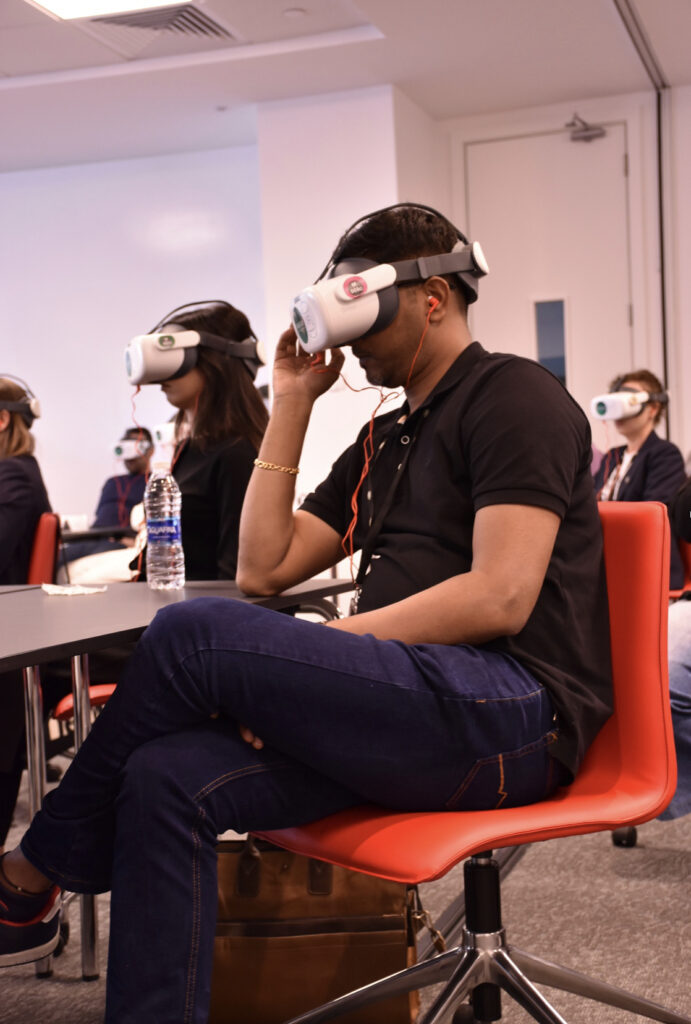
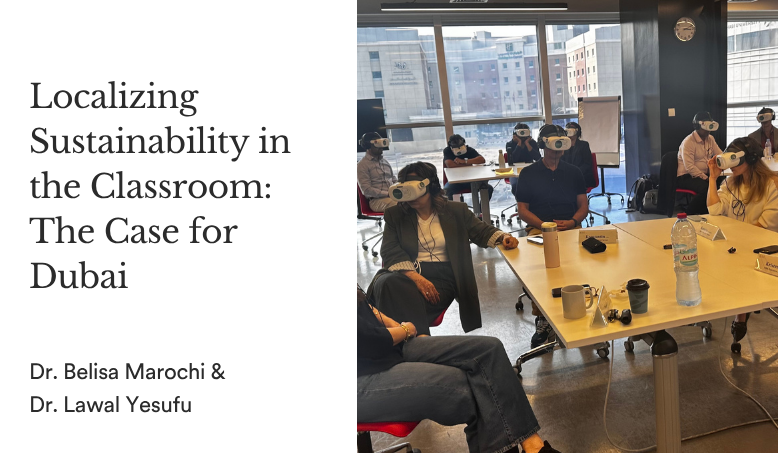
Dr. Marochi has also brought immersive technologies such as virtual reality into the classroom, where students “stepped” into shea-producing communities in Ghana through VR headsets. Through a collaboration with AVRIS Technologies and the AAK Kolo Nafaso program, students engaged with the sustainability of the supply chain of shea butter. With props such as Mars chocolate and Dove hand creams, students learned about supply chain sustainability while traveling through Ghana in their headsets. These activities have invited students to reflect on how business decisions are deeply contextual. What works for the US does not necessarily work for Ghana.
Who gets to tell the sustainability story?
We design courses and assignments that intentionally invite students to bring their own voice and lived experiences of sustainability to the classroom.
An essential approach to delivering a message on sustainability involves storytelling and visualization. Impactful graphs, charts, and infographics are at the core of sustainability pedagogy. Several well-known visuals depict how climate-related factors have changed over time, such as CO2 emissions or practices for attaining sustainability goals. The UAE equally participates in these efforts, stating its commitment to the SDGs using these data visuals.
In his courses on Business Insights through Data and Data Visualization, Dr. Lawal Yesufu presents UAE-focused data and visualizations that sparked discussions on climate change and sustainability. These discussions led to two team assessments. In the first, students developed a sustainability story using publicly available data visuals and infographics, grounding global issues in the local UAE context.
The second assessment was more technical. Students developed a sustainability message by transforming data into visualizations using tools such as Tableau or PowerBI. These visuals were presented in class. Together, the two assessments allowed students to bring their own voice into the classroom.
Contested understandings of sustainability
Teaching sustainability in Dubai also involves sensitivity to cultural nuance. Many sustainability topics are often seen through the lens of Western liberalism and free markets, or framed by researchers and scholars from the West, marginalizing local experiences.
The concept of “sustainability” can be polarizing, and we tackle the topic by explaining the history of the concept and framing it within a critical lens of power struggles globally. While skepticism on the topic of sustainability can come up, our experience shows this often stems not from a lack of concern, but from a sense that global narratives do not align with corporate practice.
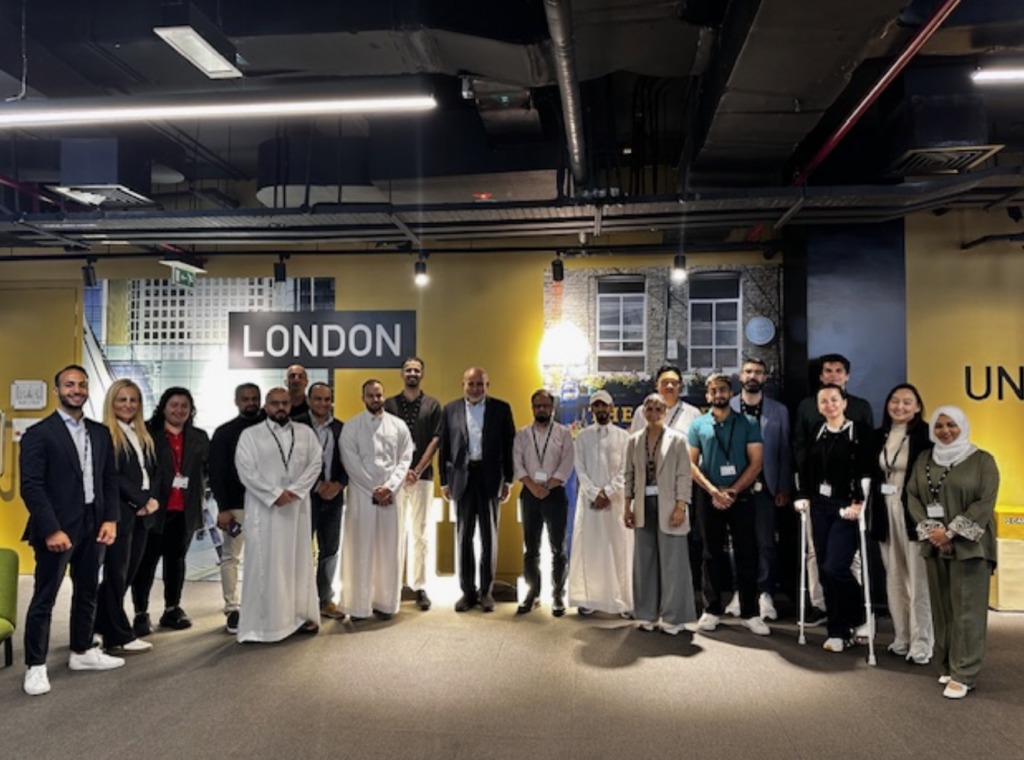
In the Dubai classroom, we prioritize pluralistic perspectives. To bridge this, we ground discussions in local ethical frameworks. For example, Dr. Marochi invited theologian Aref Nayed to class to show how sustainability is embedded in Islamic philosophy. As the former Libyan Ambassador to the UAE, Dr. Nayed explained how major faiths protect the environment. Students from all over the world have connected deeply to this talk.
By framing sustainability as a matter of long-term value creation and risk management, we make it indispensable to students entering any business. Sustainability is no longer an add-on but a core component of business education.
“By framing sustainability as a matter of long-term value creation and risk management, we make it indispensable to students entering any business.”
Designing for inclusion, not compliance
Inclusivity is at the center of our practice. Broadening what counts as traditional business knowledge by bringing in concepts of decoloniality and explaining the context of family-owned businesses and state-owned enterprises in the face of national visions are a few deliberate choices to ensure we are inclusive.
We also pay attention to representation in teaching materials, so that examples, readings, and cases reflect a range of regions, sectors, and leadership models rather than a single dominant narrative.
Dr. Marochi has brought in leaders from Novo Nordisk, DAMAC, and DP World to the classroom. In addition, Dr. Yesufu invited Dr. Puteri Nohuddin, a leading researcher in data science and sustainable development, as a guest lecturer in the Executive MBA classroom. Her session showcased applied research on ocean-current data collection and its role in improving climate predictions, renewable energy planning, and pollution control, offering students insight into scientific approaches to sustainability.
These choices have helped us move away from one-size-fits-all approaches and toward learning environments where students have been able to locate sustainability within their own realities, rather than feeling asked to adopt someone else’s.
Conclusion: The transformative power of the local context
Our research on sustainability gives us insights into how to adapt our pedagogy to the local context.
Localizing sustainability pedagogy is about respecting the people and the place. In a city defined by movement and ambition, such as Dubai, we have a unique opportunity to train leaders with contextual intelligence.
When global challenges are grounded in local realities, sustainability education becomes transformative rather than performative. In Dubai, we want our students to graduate with the capacity to think ethically, act contextually, and lead responsibly in a world where context is everything. Sustainability starts with understanding the ground we stand on.
“We want our students to graduate with the capacity to think ethically, act contextually, and lead responsibly.”
_____________________________________________________
About the authors
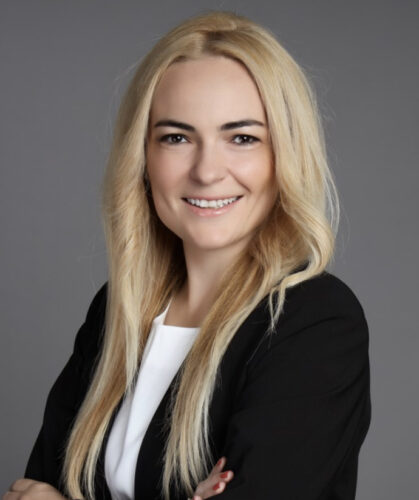
Dr. Belisa Marochi
Dr. Marochi is a researcher and consultant specializing in sustainability, gender studies, and international relations. She has taught at universities in Denmark, Sweden, the UK, and the US and has acted as a visiting scholar in India and South Africa. Her consulting expertise includes assisting companies like Airbus, Kraft Heinz, and Procter & Gamble in developing consumer insights and sustainability practices.

Dr. Lawal Yesufu
Dr. Yesufu is an experienced consultant and professor of business analytics, specializing in digital transformation through people, technology, and change. He has led multiple consulting projects in business intelligence, system development, and process reengineering across the UK and Canada. His research interests focus on the psychological contract, business analytics, social innovation, and sustainable development. Dr. Yesufu has recently edited and published in the Springer Nature series, Sustainable Development through Data Analytics and Innovation Techniques, Processes, Models, Tools, and Practices.
_____________________________________________________
Curious to learn more about how Hult has embedded sustainability on campus and in our programs? You can read our PRME Report and Carbon Footprint Calculation on our website: hult.edu/about