

Inside the Hult AI Lab: Faculty on the Advantages, Challenges, and Opportunities Ahead
 Hult News,
3 months ago
9 min read
Hult News,
3 months ago
9 min read
With short courses and new tools launching weekly to help you “get AI fluent” fast, it’s easy to mistake tool familiarity for real capability. What’s becoming increasingly clear is that the value isn’t just in knowing the tech. It’s the human judgment to know how to use it.
That’s exactly the gap the Hult AI Lab is designed to close—led by Hult’s practitioner faculty who have direct experience of how AI is being applied today.
Each AI Lab is delivered by a multidisciplinary team of Hult faculty from across business functions and areas of expertise, bringing decades of collective insight and on-the-ground experience into the classroom. We spoke with a few of them about how they’ll help you build the kind of applied skills employers are struggling to find and the confidence needed to succeed in environments where AI is already part of how business gets done.
Luis Escamilla, PhD
Mexico
Former VP of Digital Transformation, UC Berkeley
Former Industry Analytics Manager, Procter & Gamble
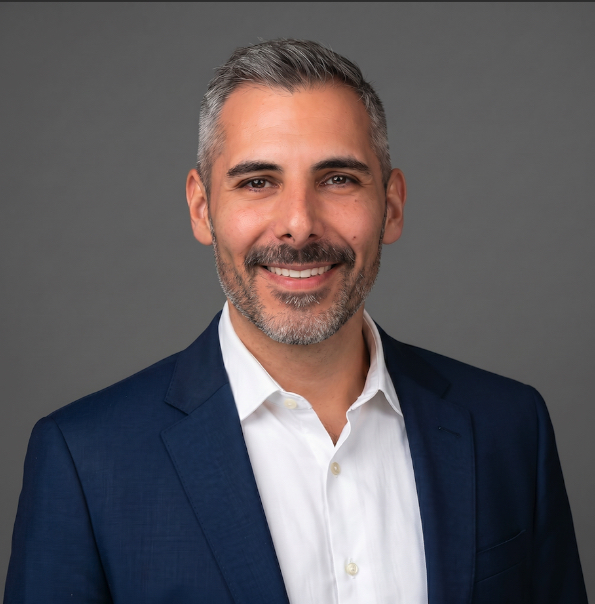
“For anybody who is willing to take their career to the next level, they need to choose a school that’s doing something like what Hult is doing in the AI Lab.”
I’ve spent the past 16 years teaching and leading campuses at Hult, while consulting with organizations including Honeywell, Google, and Williams-Sonoma—so I’ve seen what it takes to make AI work inside and outside the classroom.
One thing I’ve seen is, for their first assignment, all the new MBA students using an LLM submit essentially the same answer. When we open the submissions in class, nobody can tell which one is theirs. That’s the moment people realize that LLMs are generic. They’re a tool to enhance your thinking, but the final output needs to be yours.
For the Hult AI Lab, a group of faculty members will design it together and lead different sessions, so you learn from multiple perspectives. That group includes a human skills coach focused on communication and leadership, a practitioner who’s implemented AI in a real working environment, a strategy-focused faculty member who can connect the work to finance, marketing, and growth, and a technology specialist grounded in coding and how systems actually work.
You’ll leave with something you can tell an employer: I’ve used AI tools to launch work in the real world, dealt with real-life consequences, and learned why a human in the loop matters.
Guillermo Torres
US
Strategy & Consulting Senior Manager, Accenture

“What a master’s or MBA gives you is time and friction: time to learn from mistakes, and friction in the form of feedback, peer challenge, and faculty who won’t let a weak answer slide.”
After 20 years in consulting and financial services, my current work is helping clients in banking, insurance, and asset management use AI, not as an experiment, but as a lever for real, measurable change.
The AI Lab means I’ll bring that experience from the boardroom into every session. You’ll build automated workflows, analyze real datasets, prototype solutions, and present recommendations as if you were standing in front of a client. The problems are real, and the standard we’ll hold you to is a professional one.
I’m in rooms with CFOs, operations leads, and risk committees every day, so I’ll push you on whether your solution will survive contact with a real organization. I know what questions get asked, and my job in the AI Lab is to help you be ready to answer them before you walk into those rooms yourself.
Sílvia Ariza Sentis
Spain & Mexico
Founder & CEO, Eina Data
Former Data Science Manager, Uber

“You should not outsource your thinking to AI. Use your own critical thinking first, and then use AI to challenge, expand, refine, or validate it.”
As a data scientist who has worked across aviation, banking, and mobility—with companies including Iberia, Uber, and DiDi—I’ve spent my career at the point where a model meets a real business decision. That gap is where things go wrong. And it’s what I focus on in the AI Lab.
A technically correct AI output isn’t always the right business answer. In the AI Lab, you’ll learn to use your own thinking first: define the problem, structure your reasoning, and form a hypothesis. Then you’ll use AI to challenge, expand, or validate it—not the other way around. That discipline is what stops you becoming dependent on a tool that can be confidently, plausibly wrong.
Some of my own data work has been recognized by the United Nations for its impact on the environment, gender pay equality, and road safety. That experience shaped how I think about AI: not just as a tool for efficiency, but as something that can be designed to create better, fairer outcomes—if the human behind it is asking the right questions.
Luca Parisi, PhD
UK & Italy
Former Director, Clinical Data Science, Norstella
Former Associate Director, Machine Learning & AI Engineering, IQVIA
Former Associate Manager, AI Consulting, Accenture

“Knowing when not to trust AI is a crucial skill that differentiates leaders from followers.”
I’ve spent over 14 years designing and delivering AI-driven solutions across Fortune 500 organizations, particularly in life sciences and healthcare. In regulated industries like these, the stakes of a poor AI judgment call are real. That’s the perspective I bring into the AI Lab.
What that experience taught me is that the most successful leaders aren’t those who know the most tools. They’re the ones who know when and how to use them responsibly. In the AI Lab, you’ll work through real business challenges where AI generates convincing, confident responses that are incomplete, misleading, or simply wrong. Learning to spot that—and knowing what to do about it—is what separates a tool user from someone who can actually lead in an AI-enabled environment.
The students who stand out in industry are rarely those who write the best prompt. They’re the ones who can communicate a compelling vision, influence stakeholders, and make the right call at the right time, backed by evidence.
Patrick Lynch, PhD
US
Hult AI Faculty Lead
AI Leadership & Innovation Course Instructor, Coursera
Principal, Strategy Executed
Former Senior Manager, Accenture
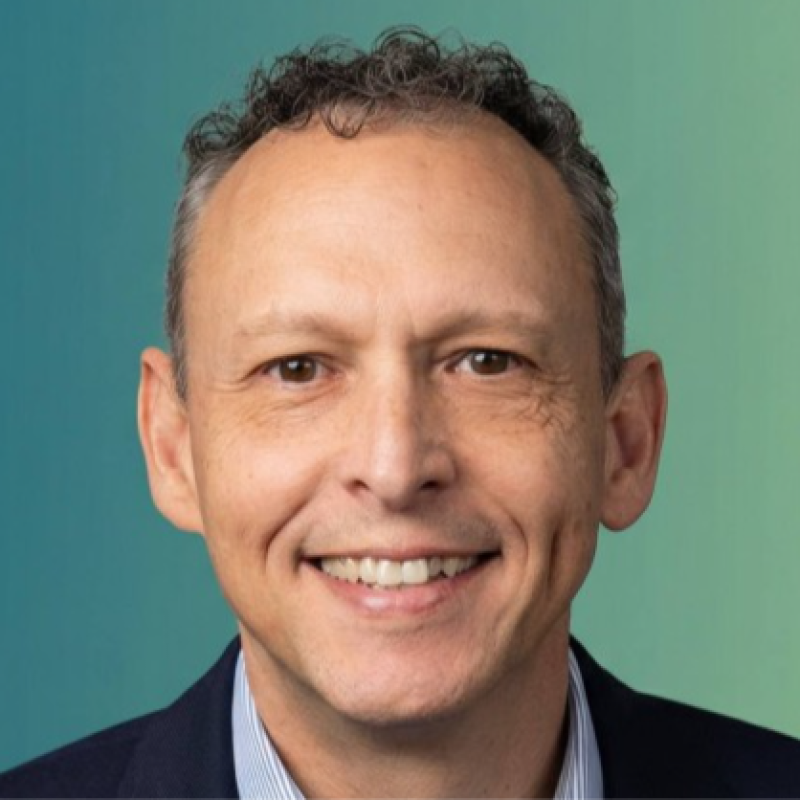
“AI is the brush. Soon everyone will hold it. The difference will be what you can do with it.”
Anthropic’s 2026 AI Fluency Index analyzed thousands of real conversations with AI. It found that people are strong at directing AI but weak at evaluating it. The more finished an answer looks, the less they question it. That’s the habit the AI Lab is built to break.
I tell students that AI is not a project—it’s a practice. As the pace of change accelerates, novelty fades faster than ever. I call it the Alice Effect. In Wonderland, Alice is worn down by a world of nonstop marvels until she’s too used to it to be surprised by anything. That’s us with AI. What made you say “wow” last month gets an eye roll today. What sticks are durable skills and genuine expertise.
The difference between a win and a loss isn’t AI skills. It’s human ones. In the AI Lab, you’ll build those the same way they’ve always been built: in a room with others, under pressure, with real consequences. Novelty fades. Expertise endures.
Martin Boeckle, PhD
Austria
Founder, antX
Former Lead Product Manager, Boston Consulting Group
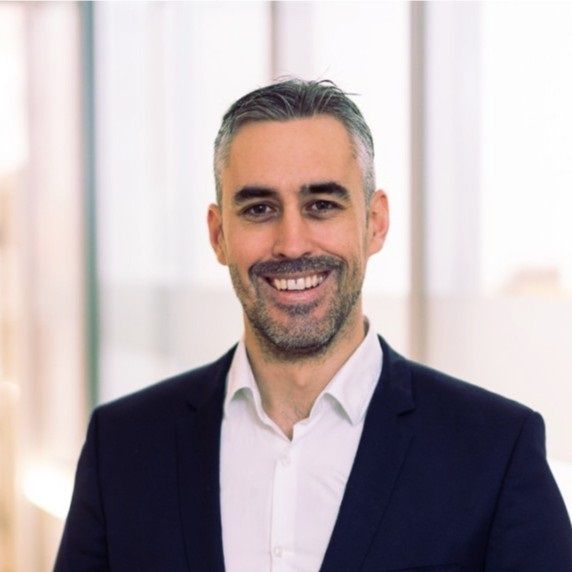
“The future is not humans versus AI. It is humans working effectively with AI, combining the analytical capabilities of technology with human creativity, empathy, and judgment.”
At BCG X, I spent years helping organizations across industries bridge the gap between emerging technologies and real business impact—turning ideas into products, strategies, and new ways of working. What that experience taught me is that successful transformation is rarely about the technology itself. It’s about understanding people, processes, collaboration, and trust.
That thinking sits at the heart of human-centered AI (HCAI)—the principle that technology should be designed around human needs, organizational goals, and real-world challenges, not adopted in isolation. It’s the framework I bring into the AI Lab.
One of the biggest challenges with AI illustrates why this matters: the problem isn’t when AI produces something obviously wrong. It’s when it produces something that sounds convincing but is actually incorrect. Recognizing that difference is becoming one of the most important skills for future leaders. In the AI Lab, students move from asking AI for answers to becoming effective collaborators with it.
Tamie Salter, PhD
UK
Founder & CEO, Citizen Alert
Former Chief Technologist, Innotime Technologies

“AI is becoming a team member like any other, brilliant but not perfect. Business leaders need people who can use it with judgment rather than just enthusiasm.”
Running a company means knowing exactly what employers need from people who work with AI. And there’s a blunt phrase doing the rounds in the industry right now that captures it: “AI or die.” Employers increasingly see AI capability as a basic expectation, not a bonus.
The Hult AI Lab is where you learn to use AI the way it’s actually used in the workplace: to get more and better work done, not to tick a box marked innovation. That work is rarely clean. You’ll face messy data, unclear questions, and competing priorities, learning to prompt effectively without mistaking speed for accuracy.
My role in the AI Lab is to show what good work looks like in context—pushing on reasoning, helping you tell the difference between an answer that sounds right and one that is right. Knowing how to use AI is the entry ticket. Knowing when to use it strategically, to create real impact, is what sets you apart.
Alex Reeve, PhD
UK
Former VP of Global Marketing, Pearson
Former Business Group Director, Microsoft

“We’ll help you to use AI tools to create new value for customers and stakeholders. That means experimenting with ideas—it is a laboratory after all.”
I talk to employers a lot. And they’re not asking for graduates with AI prompting skills. Frankly, most 10-year-olds can prompt an AI.
What they do say is they need people who can use AI to enhance their critical thinking, improve decision-making, and overcome real operational challenges. People who can use it in collaboration with others, build creativity, and enable the business to do something it has never done before. That’s what the Hult AI Lab is designed to deliver.
Chances are, you’re already using AI in your daily life and studies. But that doesn’t mean very much when it comes to business strategy and leadership. The AI Lab assumes you know the basics. From there, we help you use AI to experiment with ideas, analyze opportunities, create working products, and build a business case. Because business is still about people.
Thomas Sullivan
US
Co-Founder, My City At Peace
Consultant, Society for Organizational Learning

“Short courses can help someone become familiar with a tool, but typically don’t provide the repeated application needed to develop managerial capability.”
I’ve spent years helping organizations turn strategy into execution. I know that leading teams made up of both people and AI agents isn’t a problem for tomorrow’s managers, but for today’s. The purpose of the Hult AI Lab is to prepare you for that reality.
That’s why you can expect to work on projects where you’ll analyze messy customer data to uncover growth opportunities, redesign workflows, create competitive intelligence reports, develop strategic recommendations, or build AI-enabled processes that help organizations make better decisions. Because this is what matters to real leaders at real companies.
Faculty will coach you through that process. We’ll teach you how managers think, decide, and lead in an AI-enabled environment. The focus is always on producing outcomes, not just learning the current tools and features. That’s how you learn not just to use AI, but to use it the way today’s managers do.