

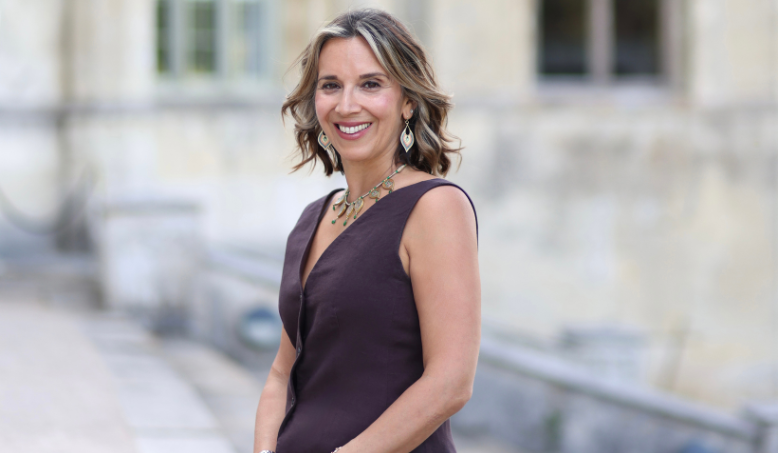
Welcoming Samreen McGregor: Returning to Ashridge and exploring the future of coaching
 Hult News,
8 hours ago
6 min read
Hult News,
8 hours ago
6 min read
We’re delighted to welcome Samreen McGregor to the coaching faculty at Hult Ashridge. Having first encountered Ashridge at a pivotal point in her career, Samreen returns with over 25 years of experience working with executives, leadership teams and organisations navigating complexity and change. Her clients have included Virgin Media O2, UNESCO, Unilever, BP, Heineken and Pentland Brands (Lacoste, Speedo).
As an internationally recognised executive and team coach, leadership consultant and Founder of Turmeric, Samreen brings an integrative, trauma-informed approach to leadership development. We spoke with her about returning to Ashridge, what participants can expect from learning alongside her, and how coaching must evolve in response to AI, complexity and the changing demands of leadership.
Returning to Ashridge
- You said that coming back to Ashridge feels like coming home. What made Ashridge the right place for your next chapter?
Returning to Ashridge in this capacity feels like coming full circle. Ashridge shaped me at a pivotal point in my career, introducing me to a community that believed leadership is fundamentally about human development as well as organisational performance. That philosophy has stayed with me throughout my career.
Since then, my work with executives, leadership teams and organisations has evolved, bringing together relational coaching, systems thinking, psychotherapy, embodied awareness and somatic wisdom.
Returning now feels like bringing those experiences back to the community that first inspired me and contributing in a way that feels deeply congruent.
- What excites you about joining the Ashridge faculty, and what will you bring to the learning community?
Ashridge has always been known for its intellectual rigour, but what draws me to it is the way that rigour sits alongside genuine humanity and curiosity.
My work sits at the intersection of leadership, organisations and the human systems that underpin performance and change. My practice and recent research have deepened my interest in how relational processes, embodied awareness and nervous system regulation support reflection, learning and meaningful change.
I’m excited to work with colleagues who continue to question and develop our profession, while helping experienced practitioners deepen their knowledge, self-awareness and discernment. As leaders face increasing complexity and AI reshapes how we think, relate and learn, it feels like an important moment to explore the questions that will shape the future of coaching.
Teaching and learning
- What conversations are you most looking forward to having in the classroom?
The conversations where people begin to notice something about themselves that they hadn’t seen before.
I love the moment when a coach discovers that there are many possible ways of working and begins to trust their own discernment, presence and capacity for inquiry.
Some of the richest learning happens when we become curious about ourselves as practitioners. Our capacity for attunement is one of the most important instruments we bring into the coaching relationship.
- What do you hope participants will leave with after learning alongside you?
I hope they leave feeling more grounded, confident and connected to themselves as practitioners.
Alongside new theories, models and perspectives, I want participants to develop greater trust in their own judgement and a deeper appreciation of the coaching relationship.
Coaching asks us to stay present with complexity, uncertainty and humanity. I hope participants leave better equipped to hold thoughtful conversations, reflect on their impact and respond with greater awareness to the people and situations they encounter.
The future of coaching
- What do you think coaches will need to be better at five years from now?
I think coaches will need to become increasingly skilled at working with complexity and understanding what is happening beneath the surface of a conversation.
AI will provide access to knowledge, frameworks and increasingly sophisticated conversational tools. The human contribution may lie in how we interpret what emerges: noticing relational dynamics, understanding context, recognising what remains unspoken and helping people make sense of competing perspectives.
For me, discernment will become one of the defining qualities of effective coaches. This means drawing on cognitive, emotional, embodied, relational and systemic perspectives to understand what matters and decide how best to respond.
- If coaching is changing, how should coaching education change with it?
Coaching education needs to bring together theory, ethics and evidence with a deeper understanding of systems, neuroscience, emotions, embodied awareness and the contexts in which people live and work.
Its relevance also extends beyond those training to become coaches. Listening beneath the surface, remaining curious under pressure, understanding one’s impact and working relationally are fundamental leadership capabilities.
Most importantly, education needs to develop the person alongside their practice. This requires experience, reflection, feedback and sustained attention to how we show up in relationship with others.
A personal perspective
- Some people describe you as being direct. What does directness mean to you as a coach?
For me, directness is an expression of care.
It means being willing to bring into the conversation what feels important, even when it may be difficult to name, while holding the relationship with compassion and respect.
When there is sufficient relational safety, people can explore the private experiences behind visible leadership without feeling judged or diminished. Those conversations can open up new possibilities for learning and growth.
- What’s something people won’t discover about you from reading your biography?
I grew up in Venezuela with an Indian father and a Venezuelan mother, learning early to live between cultures, identities and different ways of making sense of the world.
It taught me that no single perspective contains the whole truth. I think that’s where my instinct to look beneath the surface began, and why I remain fascinated by identity, belonging and the unseen forces that shape how we live and lead.
One final question: the challenge facing leaders today
To close, we invited Samreen to turn her attention to the wider challenges facing leaders and organisations.
What is the biggest leadership challenge organisations are facing today?
One of the greatest challenges is creating the conditions in which collective sense-making and wisdom can emerge.
As the world becomes more complex, leaders must hold competing perspectives, navigate ambiguity and make decisions without complete information. This requires more than finding quick answers; it means enabling people to think together, challenge one another respectfully and remain open to different perspectives.
I’m particularly interested in how relational awareness and creative inquiry can help leaders make sense of complexity together. When people can have these conversations, new possibilities for action and change can emerge.
Explore coaching at Hult Ashridge
Inspired by Samreen’s perspective on coaching, leadership and human development? Explore Hult Ashridge’s coaching programmes to discover how you can deepen your coaching practice, develop your capabilities and support meaningful change in yourself and others.